[Georgian Wine #2] No Oak Barrels Here! Aging Underground the 8,000-Year-Old Way — The Story of Qvevri Wine
This is Bottle Station, the wine & cocktail bar perfect for solo drinks at Daehwa Station, Ilsan!
Today's post follows up on our first piece on Georgian wine — this is part two!
In the last post, we covered a brief history of Georgian wine and looked at some of Georgia's native grape varieties.
Today, we're diving into the single biggest thing that sets Georgian wine apart from everything else.
Ready to fall into the world of Georgian wine? Let's go!
Did they even have oak barrels 8,000 years ago!?

Where do you normally think wine gets aged?
Most of the time, it's oak barrels or stainless steel tanks.
But did they have stainless tanks or oak barrels 8,000 years ago?
Stainless steel only showed up in 1913, with the modern industrial age.
And according to academic reports, oak barrels were first used around the 1st–3rd century BCE — roughly 2,500 years ago.
Which means: 6,000 years BCE, none of these vessels existed yet.
So where was the wine aged?
Let's find out together, here at Bottle Station — the wine & cocktail bar for a great solo drink at Daehwa Station, Ilsan.
Qvevri — there since the very beginning of wine

The heart of Georgian wine is this: the qvevri.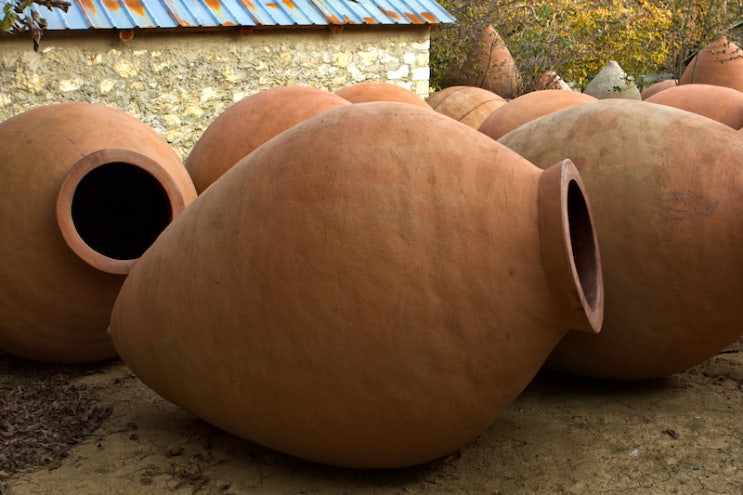
It honestly looks a lot like a Korean jangdokdae (traditional earthenware jar terrace), doesn't it?
The qvevri can be considered the most traditional wine-aging vessel there is.
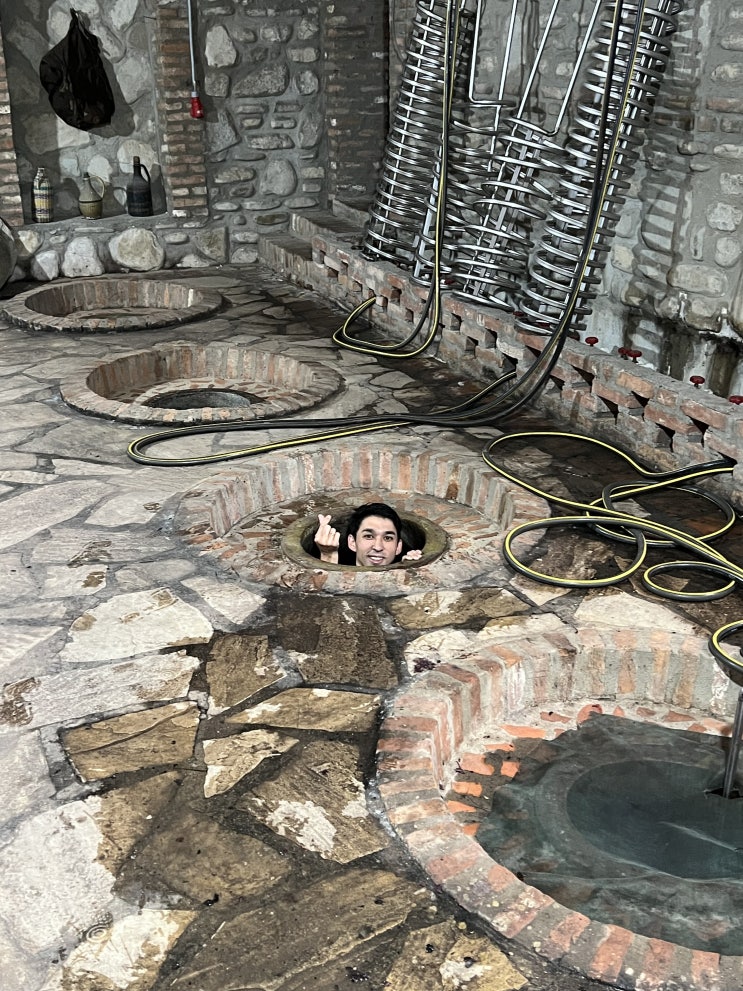
Just like burying kimchi in the ground, the whole jar is buried underground, then filled with wine to age.
This winemaking method was even inscribed on UNESCO's Intangible Cultural Heritage list in 2013.
Why bury it underground, of all things?
Why do the Georgians age their wine in qvevri buried in the earth?
There are actually three scientific reasons.
First: a natural refrigerator system.
The most important thing during fermentation and aging is a stable, consistent temperature. Modern society can just control temperature directly — but the Georgians achieved the same thing by burying the vessel underground.
Second: a natural filtration system.
The qvevri narrows to a point at the bottom. Since the wine is made together with the skins and even the stems, sediment naturally collects down in that pointed bottom — leaving only clear wine up top.
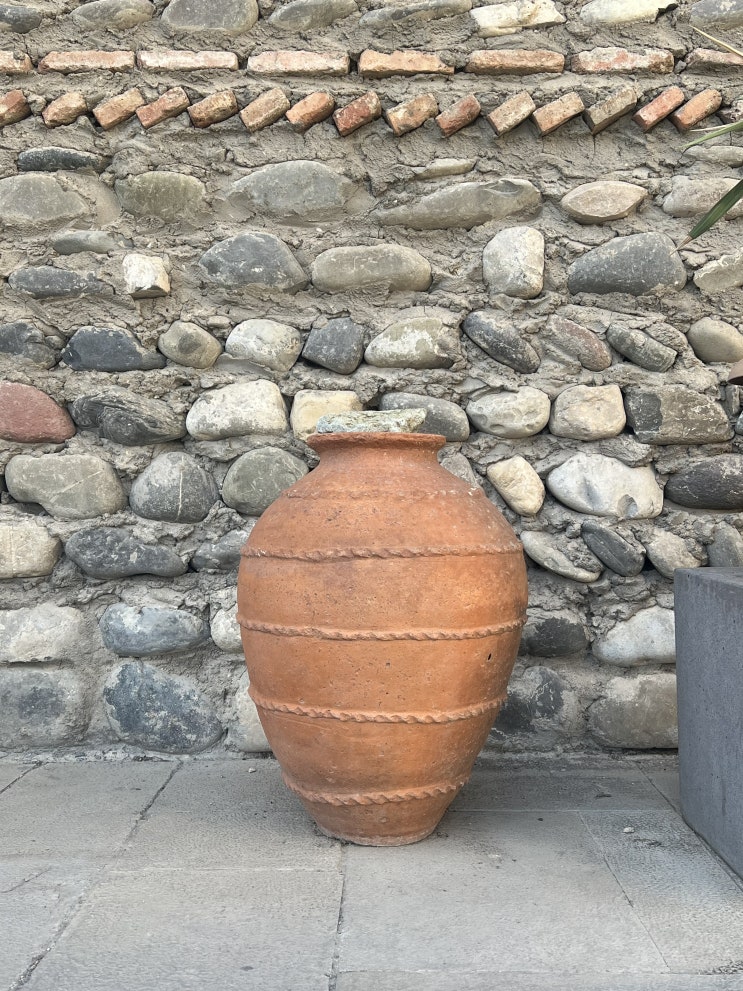
Third: it's a breathing clay jar.
The difference between oak barrels and qvevri

Aging in oak barrels gives you those familiar vanilla, chocolate, and smoky notes we all know, along with a soft texture — it's the most widely used method in the world.
Qvevri aging, on the other hand, lets the grape's own natural character shine through — deep minerality and a firm, solid structure. It's also the closest thing to traditional, natural fermentation.
Clearing up some misconceptions about Georgian wine
We've spent this whole post explaining qvevri, but even people who've heard of it often get the details wrong.
In particular: not everything aged in qvevri is an orange wine!
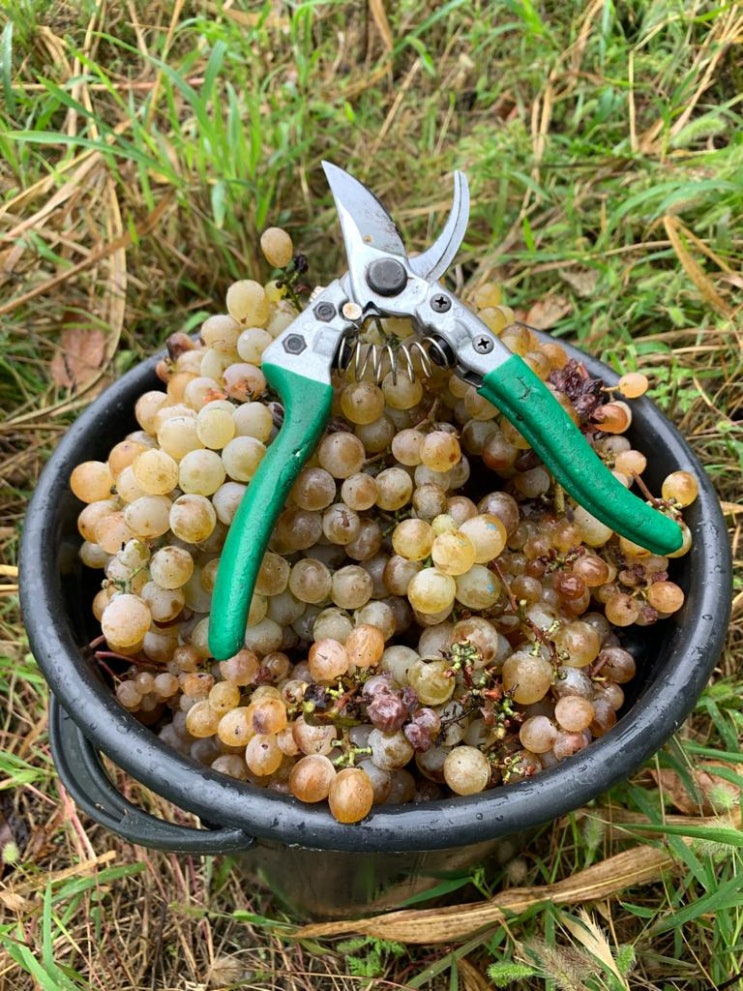
If white wine grapes are macerated together with their skins and stems, you get orange wine — but there's also a white-wine style made in qvevri without the skins.
Why Georgian wine is special
Drinking Georgian wine isn't just trying a new wine.
It's the experience of tasting 8,000 years of history, wine culture, and tradition, all in a single glass.
The philosophy of a people who trusted time over modern technology, and chose earth over oak.
That's all held inside a glass of Georgian wine.
We'll wrap up Part 2 with a video about Georgian wine.
📍 Bottle Station Daehwa / Kintex
3F, 302-2, 1568 Jungang-ro, Ilsanseo-gu, Goyang-si, Gyeonggi-do
#GeorgianWine #BottleStation #IlsanWine #IlsanWineBar #IlsanGeorgianWine #DaehwaWine #DaehwaWineBar #DaehwaGeorgianWine #KintexWine #KintexWineBar #KintexGeorgianWine #kintexwine #kintexbar #kintexwiskey #kintexcocktail